
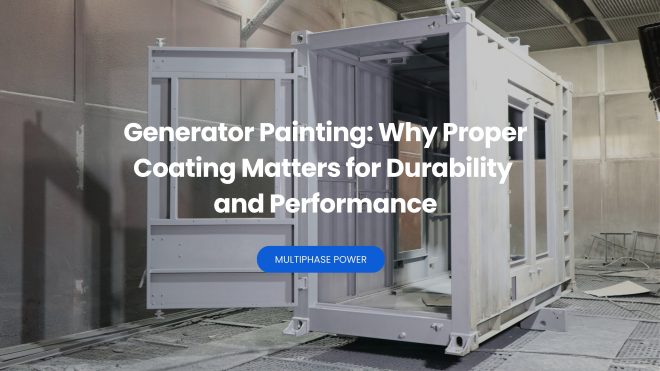
When discussing generator systems, most attention is given to engine efficiency, electrical output, or fuel type. However, one crucial factor often overlooked is the quality of the generator’s external coating. Proper painting isn’t just for visual appeal—it plays a vital role in protecting the generator from harsh environments and ensuring long-term performance.
Why Coating Matters
Generators are frequently installed in challenging environments—outdoor sites, industrial zones, coastal areas, or remote facilities—where they are exposed to:
- Humidity and rain
- UV radiation
- Salt-laden air
- Dust and chemical contaminants
Without an appropriate protective coating, the generator’s housing is vulnerable to corrosion, paint peeling, and material degradation, all of which can lead to:
- Reduced equipment lifespan
- Increased maintenance costs
- Risk of operational failure due to enclosure damage
Components of a Proper Painting Process
A high-quality coating system goes far beyond applying a quick layer of paint. It involves several critical steps to ensure durability:
1. Surface Preparation Cleaning and prepping the surface is essential. This may include: Degreasing, Abrasive blasting (sandblasting or shot blasting), Surface profiling for better paint adhesion
2. Primer Application Primers act as bonding agents and corrosion inhibitors. Choosing the correct primer based on the metal type and environment is crucial.
3. Intermediate & Topcoat Layers High-performance paints such as epoxy or polyurethane are used for topcoats. These provide: UV resistance, Chemical protection, Color retention and gloss durability
4. Curing and Drying Proper curing time ensures that the paint sets correctly and forms a durable protective layer.
Paint Selection Considerations
When selecting paint systems for generators, consider the following:
- Environment: Coastal vs inland, industrial vs residential
- Operating temperature: Heat-resistant coatings may be needed for enclosed or containerized generators
- Regulatory standards: Some industries require specific coatings for safety or compliance
Common Generator Paint Standards
Many manufacturers follow recognized industrial standards for coating and corrosion protection, including:
- ISO 12944 (Corrosion protection of steel structures by protective paint systems)
- ASTM D3359 (Standard Test Method for Measuring Adhesion by Tape Test)
- NACE SP0178 (Surface preparation of metals prior to painting)
Benefits of Proper Generator Coating
- Protects against rust and oxidation
- Extends equipment lifespan
- Maintains appearance and resale value
- Reduces downtime and maintenance
- Enhances safety and compliance
Generator painting is more than skin-deep. A well-executed coating system is a key factor in protecting your investment and ensuring dependable operation in all environments. Whether for new installations or refurbishments, choosing the right paint system—and applying it properly—can significantly improve the generator’s longevity and reliability.
Cr. Multiphase Power | www.multiphase-power.com

