
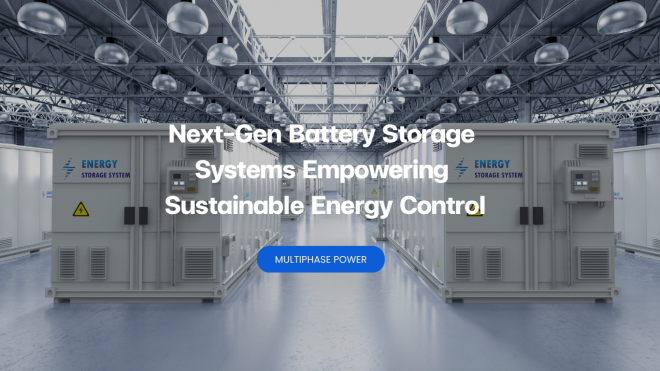
In a world increasingly driven by clean energy, Battery Energy Storage Systems (BESS) have evolved from optional add-ons to essential infrastructure. These systems are transforming the way energy is managed — not just for utilities and power grids, but for industries, businesses, and even individual buildings. Instead of depending solely on unpredictable grids or diesel generators, organizations today are turning to smart storage technology to build resilience, reduce costs, and unlock energy independence.
What Makes Battery Energy Storage So Crucial Today?
Energy is no longer just about generation. It’s about timing, flexibility, and control. With the growing adoption of renewable sources like solar and wind — which are naturally intermittent — storage systems fill the crucial gap by storing excess electricity and delivering it when it’s needed most.
Unlike traditional systems, modern BESS setups can instantly respond to shifts in demand, stabilize power supply, and seamlessly integrate with both grid-connected and off-grid environments. In essence, they turn electricity into a managed asset — not a volatile resource.
Emerging Technologies Driving the BESS Revolution
Battery storage technology is advancing rapidly, driven by both innovation and necessity. Some of the standout developments include:
- Next-gen lithium chemistries such as LFP (Lithium Iron Phosphate) that offer safer and longer cycle life
- Sodium-ion batteries as an eco-friendly, abundant alternative to lithium-based systems
- Energy automation software that enables predictive discharge based on usage patterns and market pricing
- Bi-directional charging for vehicle-to-grid (V2G) integration and decentralized energy sharing
- Fire suppression & thermal management systems that enhance the safety of containerized BESS installations
These breakthroughs are making battery systems more powerful, more affordable, and more adaptable than ever before.
Applications Across Every Sector
Battery storage is no longer confined to utility-scale power plants. It’s now a practical solution across diverse sectors:
- Manufacturing and logistics hubs use BESS to avoid production downtime and reduce peak demand charges
- Smart buildings and eco-developments install batteries to optimize solar energy usage and grid interaction
- Telecommunication and military bases depend on BESS for off-grid reliability and mission-critical continuity
- Agricultural facilities and water treatment plants integrate BESS for clean, consistent power in remote areas
Why Businesses Are Adopting BESS Now
Beyond technical capabilities, the reasons for adoption are increasingly strategic. Companies are using BESS to:
- Cut reliance on expensive diesel or unstable grids
- Meet ESG (Environmental, Social, Governance) goals
- Participate in energy arbitrage and demand response programs
- Protect sensitive operations from voltage drops or blackouts
- Future-proof their infrastructure for a decentralized energy market
As electricity becomes a traded commodity, energy storage is no longer a backup plan — it’s a competitive advantage.
Power Smarter with Multiphase Energy Storage Solutions
At Multiphase Power, we don’t just install battery systems — we engineer solutions tailored to your power challenges. Whether you’re looking to integrate BESS into an existing facility or build a custom microgrid, our team brings deep expertise in:
- Site analysis & load profiling
- System design, sizing & safety engineering
- Hybrid system integration (solar, gensets, EVs)
- Long-term O&M and monitoring support
From the factory floor to remote energy sites, we help you take control of your power — intelligently, sustainably, and profitably.
Cr. Multiphase Power | www.multiphase-power.com
